



Prefer to listen? Here’s the audio version of this article:
“Come to Liturgy” is a good invitation. It does leave a few things unexplained.
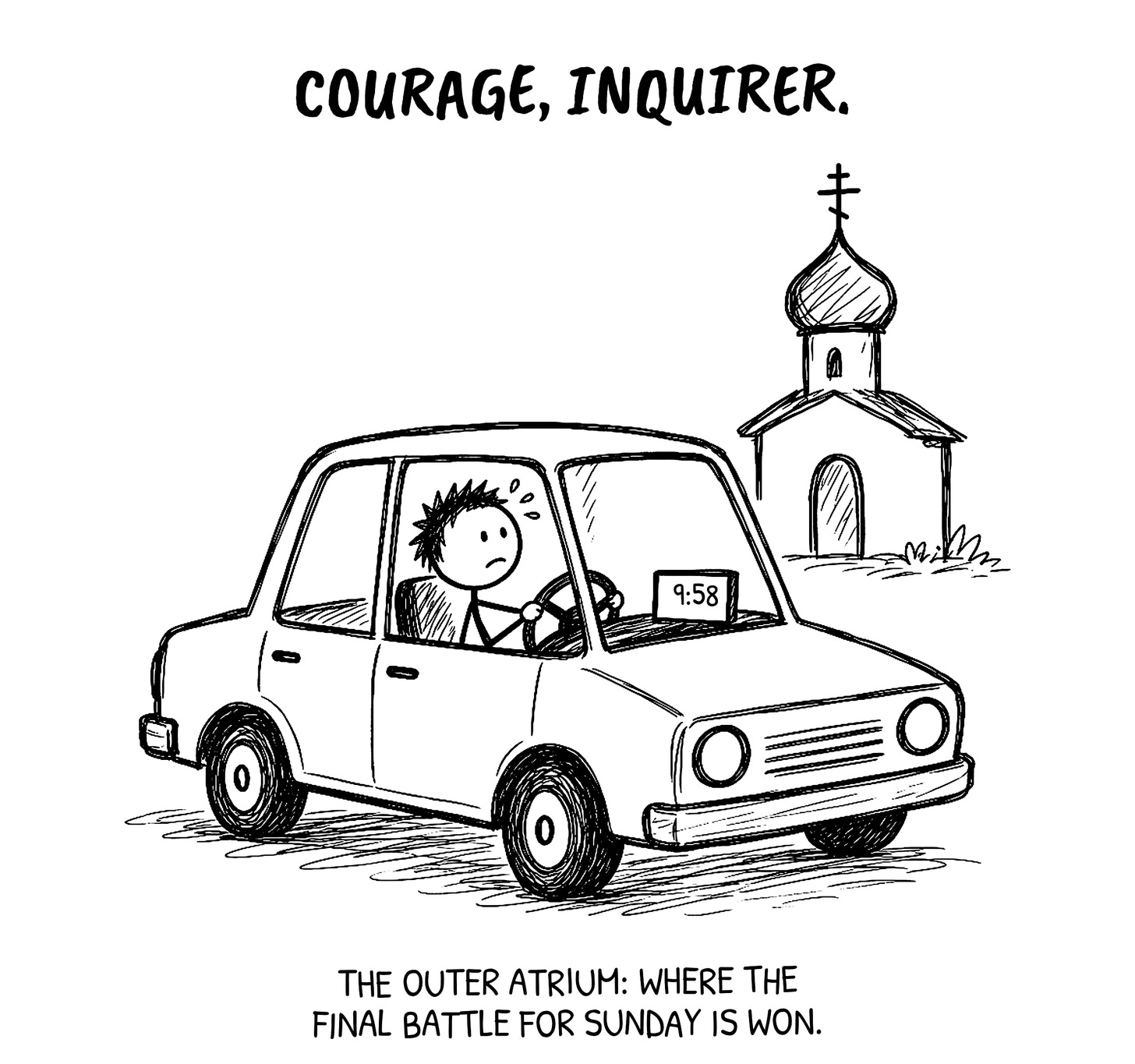
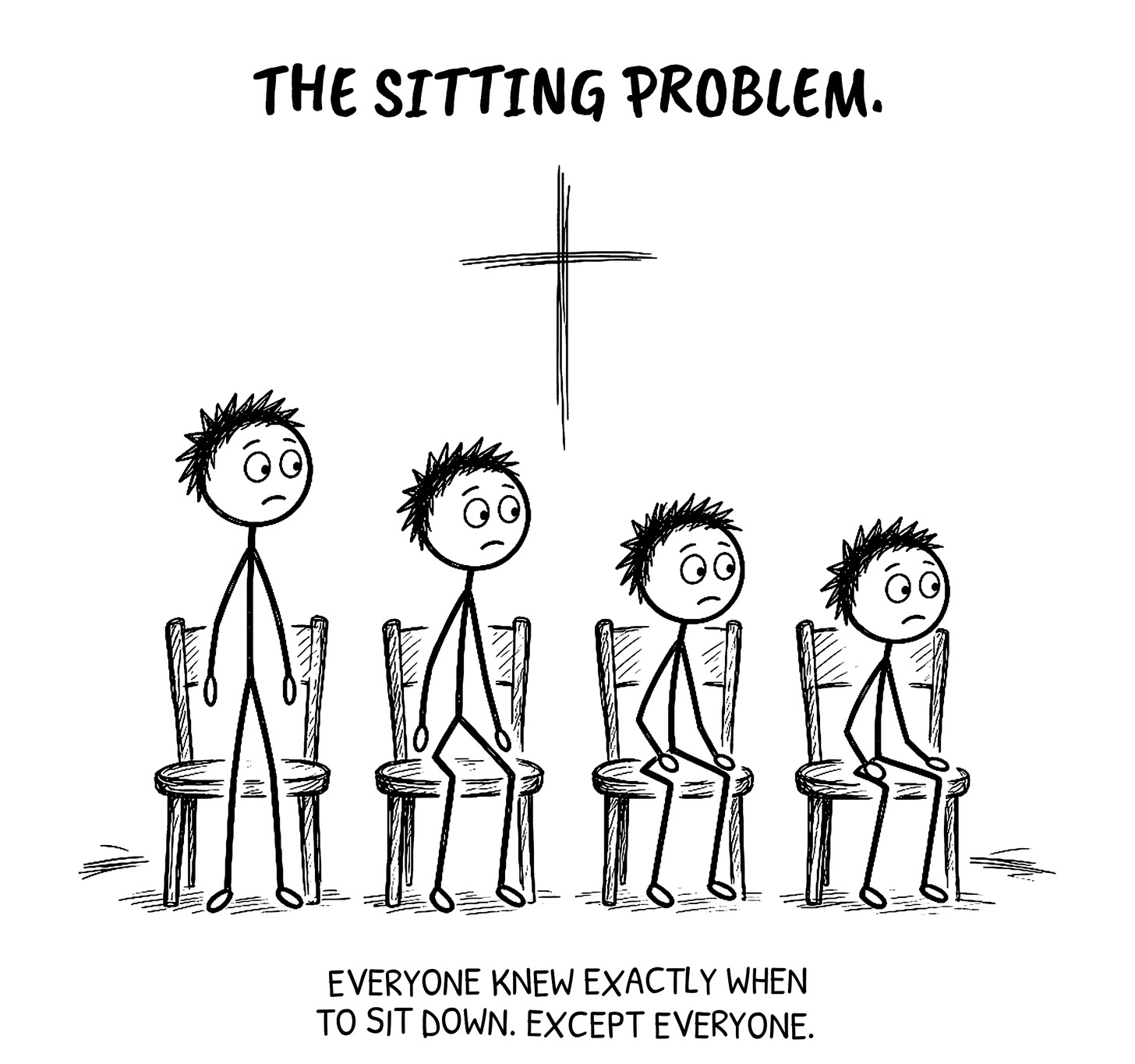
Where do I stand? What’s that screen? Why is the priest carrying a book around? Is that bread Communion? And how does everyone else know when to sit?
That last one may involve more guesswork than you’ve been led to believe.
I’ve put together A Field Guide to the Orthodox Church for the person asking those questions. It’s free to read, illustrated, and written in ordinary language. You don’t need an Orthodox vocabulary to get started. Learning some of it is part of the point.
The roadmap
A field guide helps you recognize what you’re looking at. You find the thing, learn its name and what it’s doing, then look up from the page again.
This one follows an Orthodox Sunday morning through 33 stops, beginning with the courtyard and the steps, walking through the Divine Liturgy, and continuing past the dismissal to coffee hour and a final look at what just happened.
The service map is the roadmap. The whole Sunday morning as one road: before you go in, Matins (Orthros), the Word, the Eucharist, and the time after the dismissal. You can see the Small Entrance when the Gospel comes out, the Great Entrance when the gifts go in, Communion for prepared Orthodox Christians, and the blessed bread afterward—without needing anyone to whisper the plot at you mid-service.

Each stop explains what you’ll notice, what it’s called, what’s actually happening, why it matters, where it came from, and what you do. There are sources and suggestions for going deeper, too. The guide distinguishes what Orthodox Christians do from what a visitor may do, and it makes room for differences in parish practice. Your friend’s parish isn’t necessarily doing it wrong because something looks different from the diagram.
Across eight parts, there’s also room for what Orthodox Christians believe, the sacraments, the Church’s week and year, prayer and fasting, history and our Christian neighbors, and how people become Orthodox. You can look something up without enrolling yourself in a research project.

Read a little. Then put it away.
If you’re planning a first visit, start with Your First Visit. Read through the Liturgy walk-through beforehand if you can. Then go.
Keep the guide on your phone for looking something up before or afterward. During the service, your phone can mostly stay in your pocket. You came to church, not to keep up with thirty-three browser tabs.
If you only read one page, make it Your First Divine Liturgy. It’s a one-page cheat sheet you can print, fold, and keep in your pocket. There’s a downloadable PDF, too.

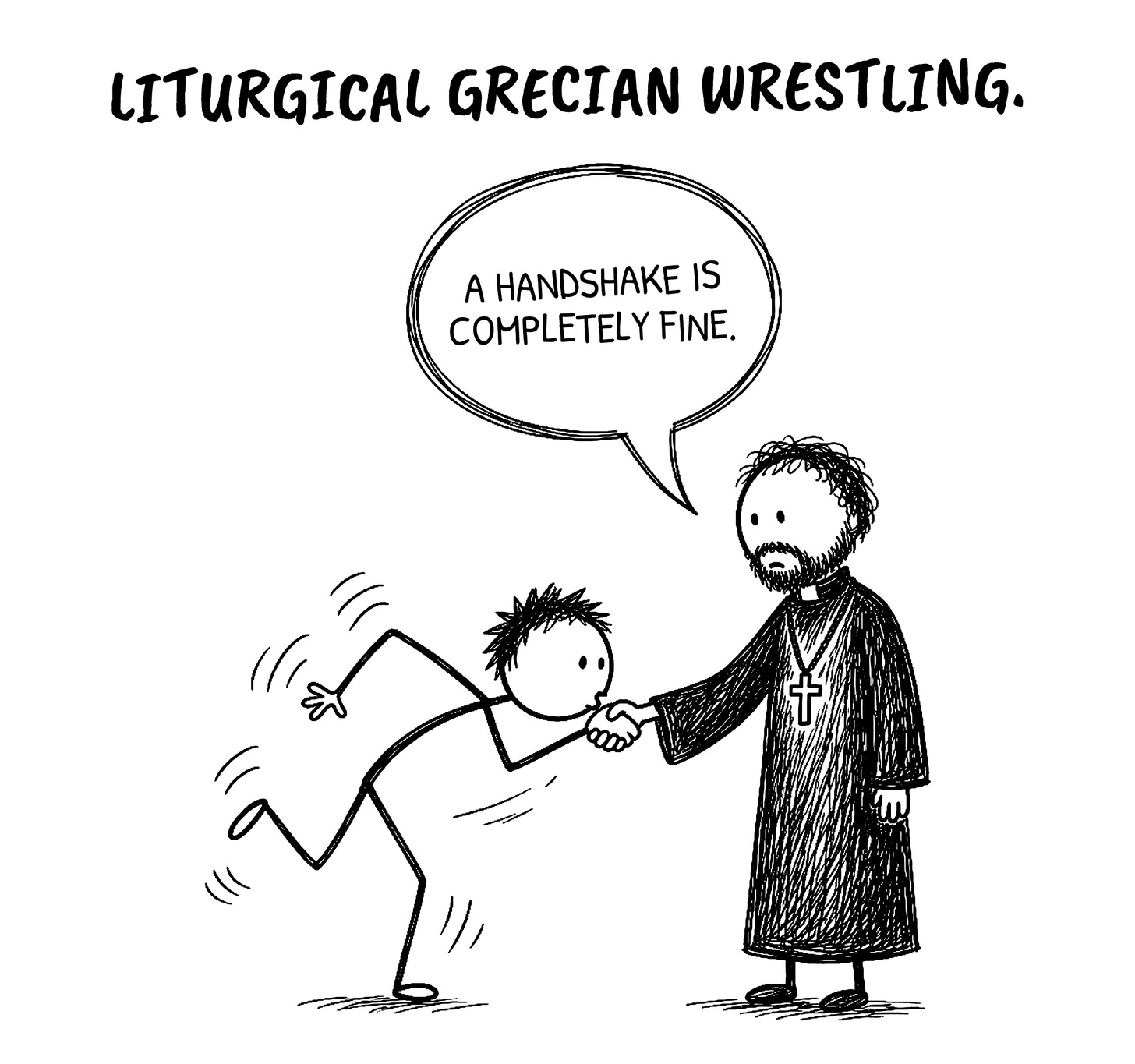
You don’t need to master the gestures before walking through the door. Stand when others stand if you’re able, sit when you need to, and watch. Communion is for prepared Orthodox Christians; visitors can remain in place and pray. The guide explains the distinction between Communion and the blessed bread offered afterward.
It’s for curious friends and first-time visitors. It’s for catechumens putting names to things they’re beginning to recognize. It’s also for people who’ve been Orthodox for years and still have a question they’ve never quite asked aloud.
And it’s for the person bringing a friend, who would like to offer something more useful than “just follow along.”
The guide isn’t a catechism or a replacement for a parish, a priest, or a catechist. It’s a practical companion. Read enough to get oriented, then give your attention back to the service and the people in front of you.
It’s still being revised, and corrections are welcome.
The guide can answer some questions. Father still gets the rest.
Help someone through the door
Please share this with everyone you know who might find it useful. Text the guide to a curious friend. Send it to the person you’ve been inviting to Liturgy. Give the link to your priest or catechist, or print a cheat sheet for someone coming with you.
You don’t have to deliver a lecture along with it. “Here’s something that might help on Sunday” will do.
The last line of the cheat sheet is worth passing along with everything else:
Nobody expects you to know any of this.
Come and see. There’s room for you, even before you know what the room is called.
Thanks for reading Simply Orthodox! This post is public, so feel free to share it.
Simply Orthodox is a reader-supported publication. To receive new posts and support this work, consider becoming a free or paid subscriber.