


For many Christians, especially from Protestant backgrounds, the Orthodox Church’s reverence for the Virgin Mary can be a significant stumbling block. It may feel foreign, excessive, or even unbiblical. One might imagine this is just another one of those “Roman Catholic” things, leading many to dismiss Mary’s role altogether to avoid any hint of what they perceive as worship.
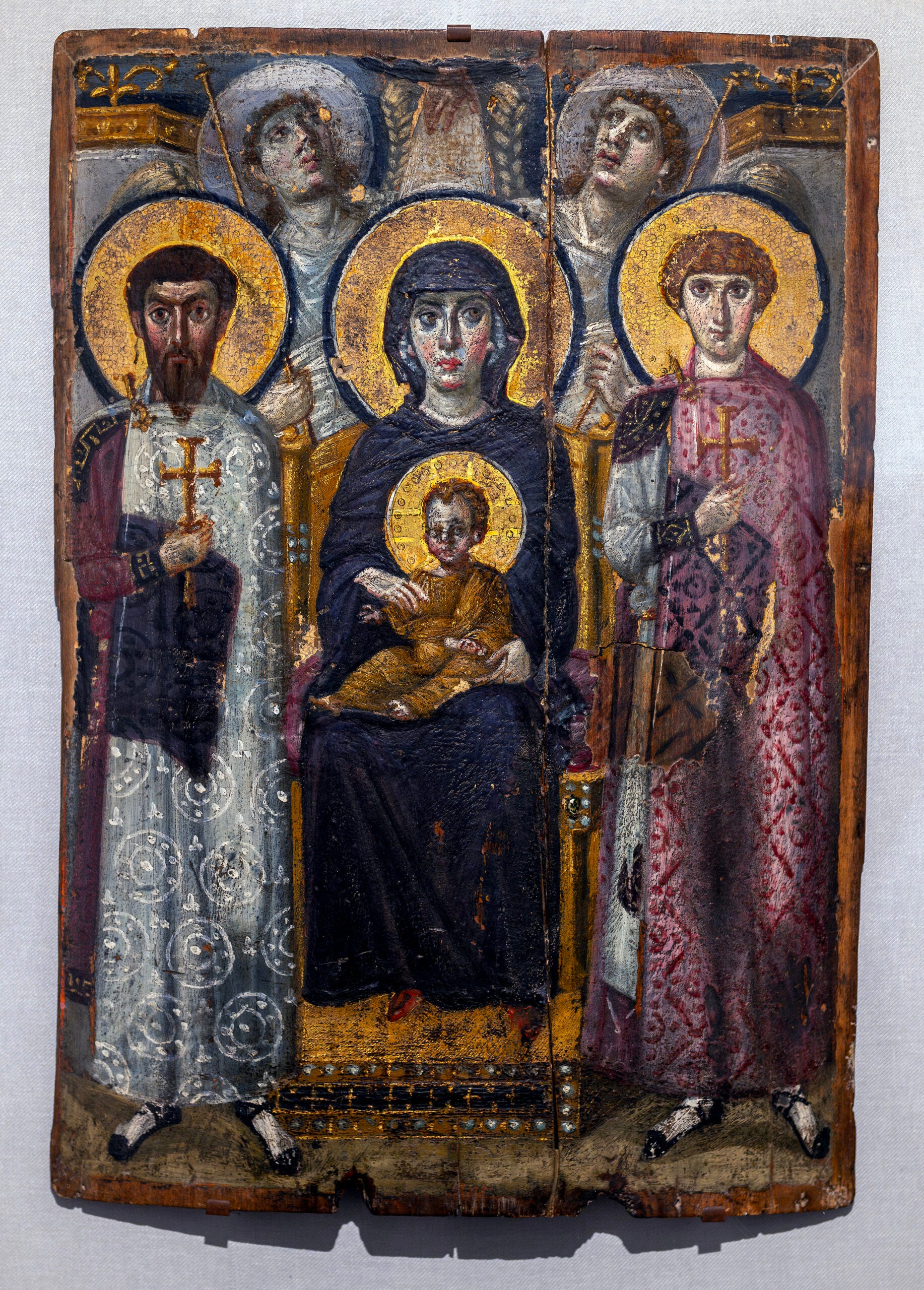
However, the Orthodox perspective on Mary, the Theotokos (God-bearer), is not an overreaction or a later invention. It is a carefully preserved tradition, rooted in Scripture, the writings of the early Church Fathers—and many aspects were even embraced by the first Protestant Reformers. In the Orthodox view, in order to properly understand Christ, we must also understand the one who bore Him.
One of my favorite Orthodox “podcasts”—pivotal in my journey, and one of the things that led me from distant inquirer to catechumen—is no longer releasing episodes, but the archive remains available and continues to be relevant to Orthodox inquirers, catechumens, and faithful alike. I’d like to riff on a handful of things they shared in a series of podcast episodes on the subject, which gets into three core aspects of the Orthodox understanding of Mary:
Her perpetual virginity;
Her role as the Queen Mother;
And the rich biblical typology that illumines her place in salvation history.
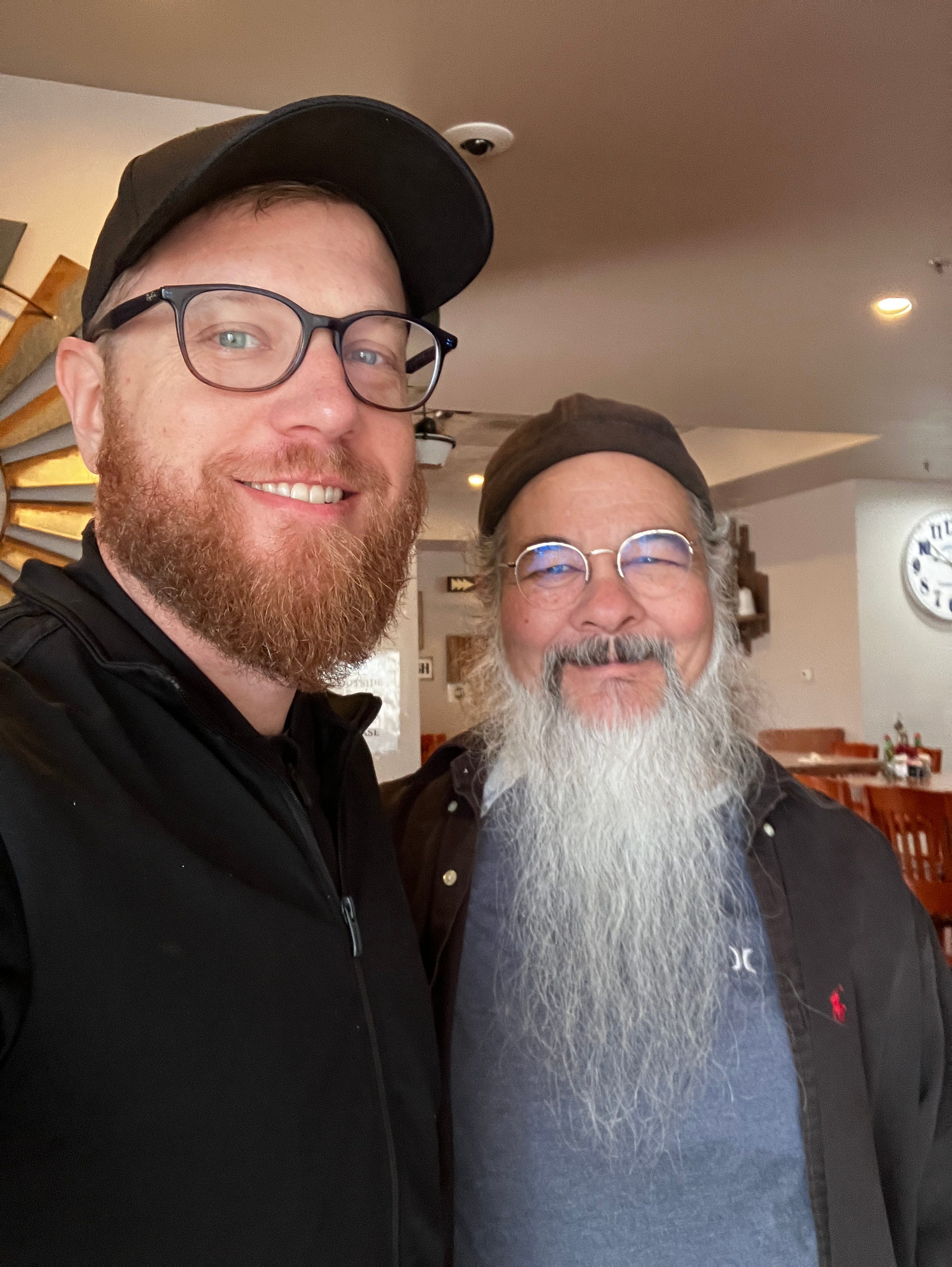
Steve Robinson and his co-host Bill Gould, have provided a wonderful three-part series on the Virgin Mary in the Orthodox Tradition on the Our Life in Christ show on Ancient Faith Radio, where their notes and sources are provided. This article is based, in part, on their podcast episodes.
You can access the podcast episodes below.
The Ever-Virgin Mary: An Ancient and Shared Belief
One of the most foundational Marian doctrines is her perpetual virginity—that she remained a virgin before, during, and after the birth of Christ. While modern skeptics (religious and non-religious alike) may dismiss this, it was the near-unanimous belief of the entire Christian world for over 1,500 years.
The Church Fathers saw this prefigured in the Old Testament, pointing to Ezekiel 44:2: “This gate shall be shut; it shall not be opened, and no man shall enter by it, because the LORD God of Israel has entered by it; therefore it shall be shut.” They understood this gate as a symbol of Mary’s womb, made sacred and set apart by the entrance of God Himself. It was a matter of holiness; the vessel that bore the uncontainable God would not be used for common purposes, just as the holy things in the Temple were set apart for God alone.
This wasn't a fringe idea by any means. Church Fathers like Saints Athanasius, Jerome, Augustine, and Cyril of Alexandria fiercely defended it—the denial of her perpetual virginity would have been seen as “blasphemy” and “madness” from the earliest of days in the Christian epoch.
What may be the most surprising perhaps is that the earliest Protestant Reformers agreed:
Ulrich Zwingli wrote a sermon in 1524 titled, “Mary, ever virgin, mother of God,” and stated, “I believe with all my heart according to the word of holy gospel that this pure virgin bore for us the Son of God and that she remained, in the birth and after it, a pure and unsullied virgin, for eternity.”
John Calvin argued against those who, citing the mention of Jesus’ “brothers,” concluded Mary had other children. He stated, “No just and well-grounded inference can be drawn from these words… No man will obstinately keep up the argument, except from an extreme fondness for disputation.”
More on Calvin’s view of Mary here.
Martin Luther wrote, “Christ, our Savior, was the real and natural fruit of Mary's virginal womb… This was without the cooperation of a man, and she remained a virgin after that.” He dismissed contrary ideas as "babble…without justification."
More on Luther and the other Reformers’ views of Mary here.
The historical record is clear: the belief in Mary’s perpetual virginity is not a late or sectarian doctrine but an ancient, ecumenical belief rooted in the reality of the Incarnation.
The Queen Mother: Advocate and Intercessor
Another key to understanding Mary’s role is the Old Testament concept of the Gebirah, or “Queen Mother.” In many historic kingdoms in general, and in the Davidic kingdom in particular, the most powerful and influential woman was not the king’s wife but his mother. She sat at his right hand and acted as the primary advocate for the people. Anyone seeking a favor from the king would often go through her, not because the king was unapproachable, but because a good king deeply honored his mother and her requests. It was the King and his Queen Mother.
We see this illustrated in 1 Kings 2:19-20. When Bathsheba comes to King Solomon, he rises, pays her homage, and has a throne set for her at his right hand, saying, “Ask it, my mother, for I will not refuse you.”
It is not Mary who accomplishes these things by her own power, but God who accomplishes them through her willing obedience.
In the New Testament, the angel Gabriel announces that Mary’s Son, Jesus, will receive “the throne of his father David” and that “of his kingdom there will be no end” (Luke 1:32-33). If Jesus is the eternal Davidic King, then Mary, His mother, assumes the role of the Queen Mother. This is why a Spirit-filled Elizabeth greets her with the royal language, “And how does this happen to me, that the mother of my Lord should come to me?” (Luke 1:43).
This is, in part, the basis for Marian intercession. When Orthodox Christians ask Mary to pray for us, we are approaching the Queen Mother, trusting that the King holds her in special honor. This doesn't replace direct prayer to God by any means. Rather, it affirms the “communion of saints,” and the special role that the one who bore God (and gave him her DNA!) plays.
We ask friends on earth to pray for us all the time; why would we not ask for the prayers of those in heaven, who stand in the very presence of God? And who is more righteous and closer to the King than His own Mother?
Mary in the Old Testament: A Tapestry of Types
The early Church read the Old Testament with eyes open to “types”—people, places, and objects that foreshadowed Christ. They also saw powerful types that foreshadowed the Theotokos. Her entire significance is rooted in her relationship to Christ; to honor her is to honor the mystery of His Incarnation.
The Church Fathers identified Mary with:
The Ark of the Covenant, which was made of incorruptible wood and held the presence of God (the Law, the manna, and Aaron’s rod). The Shekinah glory overshadowed Mary, a pure vessel, and she conceived and held God Himself in her womb for nine months.
The Burning Bush contained the fire of God’s presence yet was not consumed—Mary contained the “consuming fire” of the Godhead and was preserved.
The Rod of Jesse, from which the flower, Christ, blossomed.
The Untilled Soil, which brought forth the Fruit of Life without human cultivation.
These poetic and theological connections are not just fanciful allegories; they are a way of understanding that God was preparing for the Incarnation throughout all of history. Mary’s unique role was not an accident but a fulfillment of God’s plan, woven into the prophetic fabric of the Old Testament. This is why Orthodox hymns can praise her as the “heavenly ladder, by whom God came down” and the “bridge leading earthly ones to heaven.” It is not Mary who accomplishes these things by her own power, but God who accomplishes them through her willing obedience.
Ultimately, the Orthodox Church maintains a beautiful balance. Mary is not the fourth person of the Trinity—but she is also not ignored. She is the highest of all saints, the model of perfect faith and humility, and the mother of our King.
To call her “blessed,” as she prophesied all generations would, is to celebrate the Incarnation and give glory to the Son she bore for our salvation.
Please do check out Steve and Bill’s show, you might find other episodes there that speak to your questions now:

Thank you for the shout out, Jamey! It's hard to believe it's been almost 25 years since we started broadcasting this program on live radio on a Protestant radio station (and "podcasts" were still 3 years out.) It's always awesome to find it has been a part of someone's spiritual journey!
Saint John Maximovich of Shanghai and San Francisco, pray for us!
MOST HOLY THEOTOKOS SAVE US!