


Prefer to listen? Check out the audio version of this article below:
Highlander was gloriously absurd, and some of you may remember the iconic movie where the main character spends an entire film swinging a katana while growling the line “There can be only one.” Many of us imagine that is what ancient Jewish faith looked like.
One God. One throne. One solitary, radically simple monad sitting alone in heaven, and anyone suggesting there is more to the universe than that has his head cut off.
Then the Christians arrive, speaking of the Father, Son, and Holy Spirit, and it seems almost inevitable that the story begins writing itself. A good story. However, that is a very inaccurate account.
The Jews of Jesus’s time were monotheists—fiercely so. Each day, they recited the Shema: Hear O Israel: The LORD our God, the LORD is one (Deuteronomy 6:4). Their image of the single God however was much more complex and intriguing than the Highlander version. As soon as we understand what they really believed, the apostle’s worship of Jesus begins to appear as if they are returning home.
Let us take a few minutes to explore three areas of inquiry regarding the understanding of God in the world by Jews during the centuries leading up to Christ. First, how Jews in the years preceding Christ understood God working in the world. Second, what Jews meant by God’s “word.” Third, what transpired when that Word appeared with a face.
A Crowded Heaven
During the Second Temple era—which began after the Babylonian exile and ended with the destruction of Jerusalem in AD 70—and continues until Christ’s death and resurrection—the world was extremely difficult for God’s people. The Romans controlled much of their land, and they spoke languages and lived in ways that seemed alien. Abraham, David, Solomon and the Eternal Temple felt as though they were distant memories. When such pressure exists on individuals, they begin thinking long and hard about whether God remains with them when all aspects of familiarity disappear.
By the time of Christ, faithful Jews agreed that God acted within time and space. Though the Jews of this time were strict monotheists—as Daniel Boyarin noted—“they nevertheless recognized other supernatural beings who communicated the divine will.” Angels existed. Demons existed (”evil angels and wicked spirits”, according to Shaye Cohen). “God’s Heavenly Council” existed—a type of divine cabinet, as described by Michael Bird.
Scripture continued to muddy the waters. Abraham served lunch to three men at Mamre; one of them spoke as YHWH (Genesis 18). Jacob wrestled a man all night and went away limping, stating he saw God face-to-face (Genesis 32). “Thus the Lord used to speak to Moses face to face, as a man speaks to his friend” (Exodus 33:11).
Wisdom appears as a person in Proverbs 8, Job 28, Wisdom of Solomon chapters 7-10, and Baruch chapters 3-4. All of us studying Sirach this year encountered her in Sirach 24 where Wisdom emerged from the mouth of the Most High and was instructed to pitch her tent in Jacob. Hold onto that tent. We’ll use it next.
The Word Before The Gospels
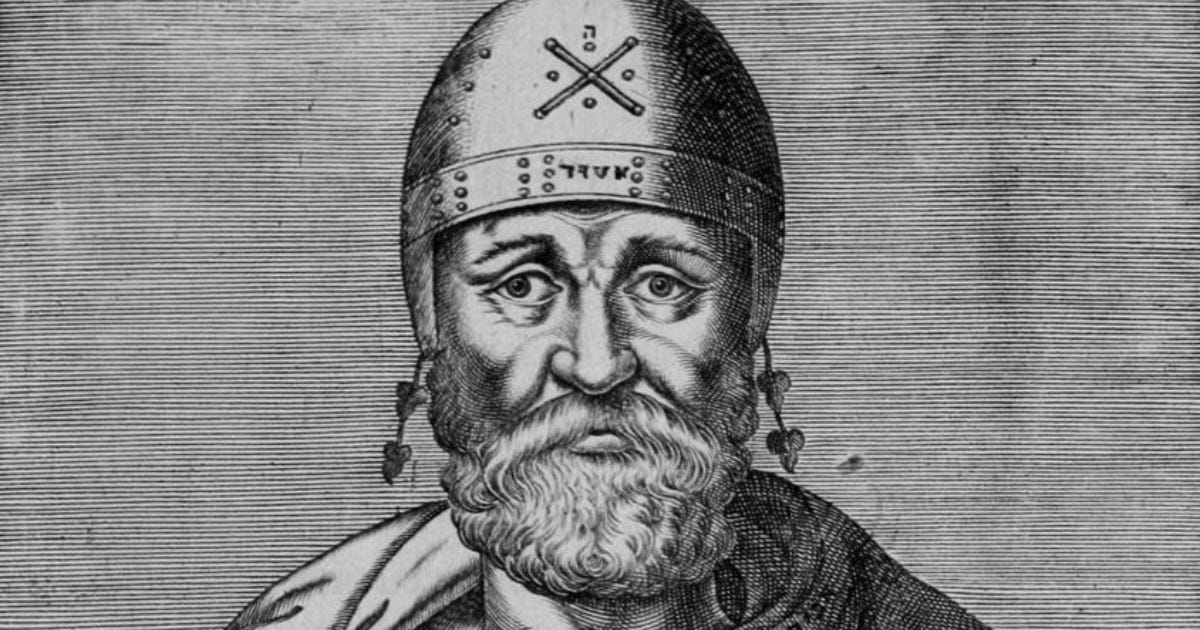
Philo of Alexandria was a Jewish philosopher living during the time of Christ. He continually referred to God’s Word (Logos)—or God’s Reason—and he discussed it with an apparent audience that required no explanation of this concept. Boyarin concludes: “there was nothing unusual about a doctrine of a manifestation of God.”
This is how Philo describes the Word:
To His Word, His chief messenger, greatest in age and honor, has granted Him to stand at the threshold and distinguish creature from Creator.
To many Jews, the Logos “served even more than angels to mediate between God and the world,” according to Cohen. It was “the manifestation of God who interacts with the physical world and is discernible to humans.” Philo, a committed monotheist, would even describe the Logos as a “second God,” who “created, revealed and redeemed.”
Review that list again. Created. Revealed. Redeemed. If you’re reading this, chances are you are familiar with the idea of “praying” the Creed. If so, I’m sure you know where this is headed.
Not everyone has studied Philo in Alexandria simply because he was a Greek-speaking intellectual. Boyarin believes Wisdom and Logos theology “existed among Aramaic-, Hebrew-, and Syriac-speaking Jews” alike.
Fr. Stephen De Young goes further: “For ancient Israelites and Second Temple Judeans, there was only one Yahweh—but He existed as multiple persons.” Not all scholars agree with De Young. Some scholars believe, like Boyarin (a Jewish scholar without any apologetic bias whatsoever), this leaves room for possibility that ideas related to the Trinity arose in pre-Christian Jewish accounts of the second and visible God found in numerous early Jewish texts.

The Line That Philo Would Not Cross
Philo came close to crossing that line. “Sooner could God transform himself into a man than a man into God,” he wrote. While God’s Word could stand at the boundary separating creator and creation—it could not cross it.
That is exactly where the Apostles crossed that line.
St. John opened his Gospel on familiar ground: “In the beginning was the Word, and the Word was with God, and the Word was God” (John 1:1). Boyarin interprets John’s opening prologue as a midrash on Genesis 1; calling nearly all of it “completely unobjectionable non-Christian Jewish thought.” Any Jew familiar with Philo would probably nod in agreement—right up to verse fourteen: “And the Word became flesh and dwelt among us.”
It’s often repeated that the Greek word for dwelt implies that the Word “pitched his tent.” Recall Wisdom’s tent in Sirach 24? John does. The Word standing on the border stepped across it—took on flesh—and set up shop near us. Oskar Skarsaune says that in Jesus the apostles found in him an embodiment of Wisdom; “the Torah personified”.
St. Paul does something similar using Israel’s greatest confession of Monotheistic Faith; The Shema itself: Yet for us there is one God, the Father, from whom are all things and for whom we exist, and one Lord, Jesus Christ, through whom are all things and through whom we exist (I Corinthians 8:6). He takes Israel’s great confession of one God—and places Jesus inside it. Bird states concerning Jesus’ earliest followers: “there was an immediate shift toward reconfiguring Jewish monotheism; where the one God of Israel would now be known/experienced as both Lord Jesus Christ AND God the Father.”
During Second Temple Judaism there were elevated angels such as Metatron—and elevated humans like Enoch. No one worshiped those two categories of individuals. Jesus received worship. The New Testament depicts Jesus as having an active role in creation—“for by Him all things were created in heaven and on earth” (Colossians 1:16); also demonstrates a prayer life consistent with at least a binitarian devotion pattern—and moving rapidly toward full Trinitarian worship.
When The Door Closes
Jesus “spoke in a manner which positioned him above the highest category permitted for humans in Judaism—namely that of prophets; not to mention rabbis,” Skarsaune states. The rabbis noticed.
As Christianity spread; rabbinical theology became increasingly hostile towards discussion about Logos or towards “two powers in heaven”. De Young states starting in the second century A.D., this view was rejected as a Jewish heresy—which De Young boldly asserts had previously been universally accepted by all Jews. Cohen is more tentative; he doubts that Logos believing Jews worshiped the Logos or assumed God became incarnate; he labels those views “central to formative Christianity but central to no other form of Judaism.”
The truth likely falls somewhere in between those positions—Bird puts it well: “the early church did not establish a strict monotheism; instead they established a christological monotheism; where one God is now known through/in/as Lord Jesus Christ.”
Why This Is Relevant To Inquirers
Eventually someone will tell an inquirer that the Trinity was invented by Greek philosophers at Nicaea in AD 325. Skarsaune responds directly to this objection: “the fathers at Nicea did not Hellenize Christology via [their] creed.” Larry Hurtado documents that early Christianity borrowed its theology from “the Jewish Matrix”; building their worship centered upon Jesus and Spirit later added philosophical vocabulary to protect what their apostles were already practicing on their knees.
The Creed is Nicene; however—the faith is Apostolic; and those apostles were reading their own Scripture.
Therefore—when this objection arises—none need panic; we can serve our friend another drink—then open Genesis 18 together.
There can be only one; that is something both Jews prior to Christ’s time would agree with Chris Lambert; we do too. They just realized that One never felt lonely.
Sources
Bird, Michael F., ed. How God Became Jesus: The Real Origins of Belief in Jesus’ Divine Nature. Grand Rapids: Zondervan, 2014. Source for Philo’s “Sooner could God change into a man than man into God.”
Boyarin, Daniel. “Logos, A Jewish Word: John’s Prologue as Midrash.” In The Jewish Annotated New Testament, edited by Amy-Jill Levine and Marc Zvi Brettler, 546–49. New York: Oxford University Press, 2011. Source for Philo’s description of the Word.
Cohen, Shaye J. D. From the Maccabees to the Mishnah. 3rd ed. Louisville: Westminster John Knox, 2014.
De Young, Stephen. The Religion of the Apostles: Orthodox Christianity in the First Century. Chesterton, IN: Ancient Faith Publishing, 2021.
Hurtado, Larry W. God in New Testament Theology. Nashville: Abingdon, 2010.
Richter, Sandra L. The Epic of Eden: A Christian Entry into the Old Testament. Downers Grove, IL: IVP Academic, 2008.
Skarsaune, Oskar. In the Shadow of the Temple: Jewish Influences on Early Christianity. Downers Grove, IL: IVP Academic, 2002.
Scripture quotations are from the English Standard Version.